廬山謠
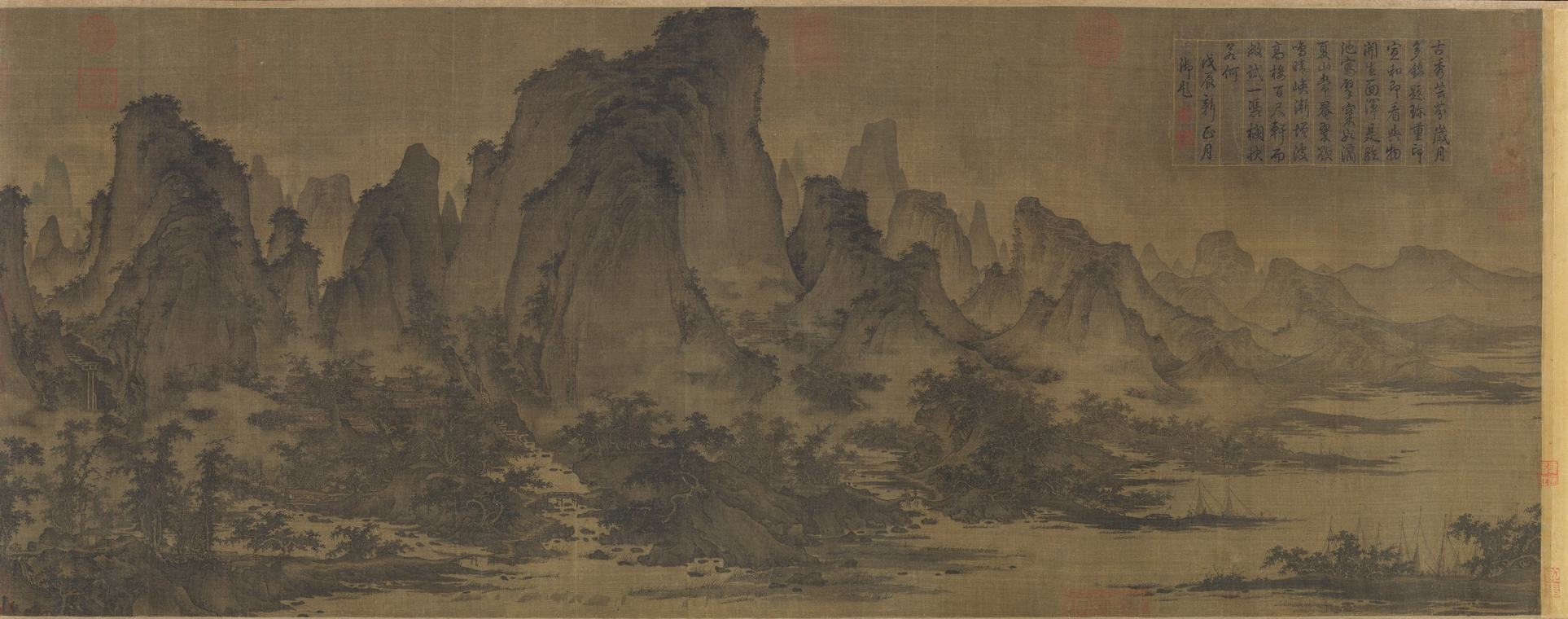
登臨含鄱口觀五老峰上日出,探禹跡,謁周匡飛仙之所,訪太白樂天東坡之遺蹤,沿五老峰三疊泉瀑布步行下山。司馬遷《史記》云:"余南登廬山,觀禹疏九江。" 今得步先人之塵,感慨既深,不覺豪情勃發,醉賦《廬山謠》。匡廬奇秀甲天下,信夫
At Hanpo Pass I stood, to watch the sunrise over the Five Elders Peaks—to trace the vestiges of Yu, to visit the place where Zhou Kuang soared to immortality, to seek the lingering steps of Li Bai, Bai Juyi, and Su Dongpo. Descending on foot along the waterfalls of the Five Elders and the Three-Tiered Spring, I recalled the Records of the Historian, where Sima Qian wrote: "I ascended Mount Lu in the south, and saw where Yu had channeled the Nine Rivers." Now treading where the ancients once trod, my heart swelled with awe and exultation—drunk with wonder, I composed this Ballad of Mount Lu. Indeed, Mount Lu—how miraculous, how supreme beneath the sky!
- 匡廬、周匡廬山及與其得名相關的匡俗傳說。
- 金芙蓉借李白寫五老峰的語句形容朝陽中的山峰。
- 太白、東坡李白與蘇軾;兩人的廬山詩在此成為對話的背景。
- 五老、三疊五老峰與三疊泉,均為廬山景觀。
- 闌干縱橫之意;此處寫交錯難平的心緒。
雲海、峰巒與瀑布隨登臨次第展開,古人的身影又不時進入眼前山色。詩在高揚與迷離之間往復,越接近山水,也越感到歷史與自身的難以看清。最後回望來路,雲仍橫在山頂;行程有了歸處,心緒卻保持開放。
Clouds, peaks and waterfalls unfold along the walk, while remembered figures enter the present landscape. The poem moves between exhilaration and uncertainty: closeness to the mountain does not make either history or the self entirely clear. In the final backward glance, clouds still cross the summit. The journey has found a stopping place, but the thoughts it has stirred remain open.